
This is one of the most-searched questions related to hydration, and the science is genuinely interesting. Water and weight management are connected in several meaningful ways.
First, water has zero calories and creates a sense of fullness. Numerous studies have found that drinking 500 millilitres of water approximately 30 minutes before meals significantly reduces calorie intake during the meal — an effect that was particularly pronounced in older adults. One randomised controlled trial published in the journal Obesity found that participants who drank water before meals lost 44 percent more weight over 12 weeks than those who did not.
Second, drinking cold water creates a small but measurable boost in metabolic rate. When you drink cold water, your body expends energy bringing it to body temperature — a process called thermogenesis. The effect is modest (approximately 25 to 30 extra calories burned per 500 ml of cold water), but over time and combined with other strategies, it contributes to an overall approach.
Third, and most practically, thirst is frequently mistaken for hunger. Many people who think they need a snack actually need a glass of water. Staying well-hydrated consistently removes a significant source of unnecessary calorie intake for many people. Our water intake calculator gives you a target that, if met consistently, naturally supports these weight management effects.
How to Use This Water Intake Calculator
The calculator at the top of this page is designed to be as precise and intuitive as possible. Here is how to get the most accurate result.
Step one — Select your biological sex. The formula adjusts for the physiological differences in fluid distribution between male and female bodies. Select “Other” if you prefer not to specify — the calculator uses a midpoint adjustment.
Step two — Choose your unit system. Toggle between metric (kilograms and centimetres) and imperial (pounds and feet and inches) using the unit switch at the top of the form.
Step three — Set your age using the slider. Drag the slider to your current age. The calculator applies age-based adjustments for younger teens and adults over 60 automatically.
Step four — Enter your weight. This is the most important input. The base calculation is weight-driven, so the more accurate your weight entry, the more accurate your result. Use your current morning weight if possible for the most representative figure.
Step five — Enter your height. Height is used in combination with weight for certain aspects of the calculation. Enter your height in centimetres for metric, or feet and inches for imperial.
Step six — Select your activity level. This is the single biggest modifier after weight. Be honest about this one — it is easy to overestimate. If you do a hard gym session three times a week but sit at a desk for eight hours a day, “moderately active” is probably the right selection, not “very active.”
Step seven — Select your climate. Choose the option that best describes where you spend the majority of your day, not where you live in general.
Step eight — Check any additional factors that apply to you. Pregnancy, breastfeeding, high altitude, illness or fever, regular alcohol consumption, and high caffeine intake all increase fluid requirements. The calculator adds clinically validated amounts for each selected factor.
Hit Calculate — your personalised daily water target appears instantly on the right, along with a breakdown of each component, a hydration schedule, and tailored tips.
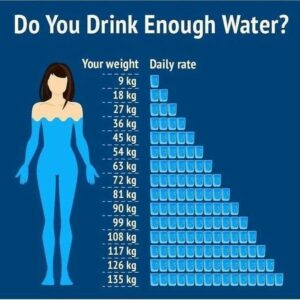
Understanding Your Results
Daily Water Target (Litres)
This is your total daily fluid goal. It includes water from all sources — plain water, herbal teas, and the fluid content of food. If you eat a diet rich in fruits and vegetables, approximately 20 percent of your target is already being met through food. If your diet is largely dry or processed foods, nearly all of your target needs to come from drinking.
The Breakdown — Base, Activity, Climate, and Factor Bonuses
Your result is split into four components so you can understand exactly where your number comes from. The base requirement is your weight-driven minimum. The activity bonus is the additional water your exercise and movement level demands. The climate bonus accounts for increased sweat rate in warmer or drier conditions. The factor bonus adds the medically recommended additional fluid for any special circumstances you selected such as pregnancy or illness.
Hydration Score
The hydration score shows an estimated percentage of your target that the average person tends to meet on any given day. It is a useful reality check — research consistently shows that a significant proportion of adults in most countries are chronically mildly dehydrated, not because water is unavailable but because it simply is not a conscious habit.
Drinking Schedule
Rather than trying to drink your entire daily target in one or two sittings — which is both impractical and counterproductive (the kidneys can only process about one litre per hour) — the calculator divides your target across eight key moments in the day. This distributed approach mirrors the way the body naturally uses and loses water throughout the day and makes hitting your target genuinely achievable.
Tips to Hit Your Daily Water Intake Target Consistently
Knowing your water intake target is one thing. Actually hitting it every day is another. Here are the approaches that research and behavioural science show actually work.
Start with water first thing. Keeping a glass of water beside your bed and drinking it before you do anything else in the morning creates an easy win and replaces the fluid lost during sleep. Your body loses roughly 500 millilitres overnight through breathing and sweating even when you are not active.
Use a marked water bottle. Studies on habit formation consistently show that visual cues and progress tracking dramatically improve follow-through on health goals. A one-litre bottle with time markers on the side — “by 11am” at 500ml, “by 3pm” at the full litre — turns an abstract daily target into a concrete, visible progress bar.
Link water to existing habits. Drink a glass every time you make a hot drink, every time you use the bathroom, every time you sit down to a meal. Habit stacking — attaching a new behaviour to an established one — is one of the most effective behaviour-change strategies in the research literature.
Eat your water. Cucumbers are 96 percent water. Watermelon is 92 percent. Strawberries, lettuce, celery, tomatoes, and oranges are all above 85 percent water content. Building these foods into your regular diet contributes meaningfully to your daily target without requiring you to drink more.
Set phone reminders for the first two weeks. Building a hydration habit takes time — most behavioural research suggests 21 to 66 days for a habit to become automatic. Phone reminders every 90 minutes during the first few weeks bridge the gap until the habit becomes self-sustaining.
Check your urine colour. Pale straw yellow is the target. Dark yellow or amber means you need to drink more. Completely clear urine consistently means you may be overdoing it slightly. Your body gives you real-time feedback every time you use the bathroom — start paying attention to it.
Frequently Asked Questions
Is it possible to drink too much water?
Yes, though it is uncommon in healthy adults going about their normal daily lives. Overhydration — specifically a condition called hyponatraemia, where blood sodium levels become dangerously diluted by excess water — is most commonly seen in endurance athletes who drink too aggressively without replacing electrolytes. For most people following the output of a water intake calculator, overhydration is not a realistic concern.
Does coffee and tea count toward my daily water intake?
Yes. While caffeine has a mild diuretic effect, research shows that the fluid content of coffee and tea more than offsets any increased urinary output. The net hydration effect of moderate coffee and tea consumption is positive, meaning they do count toward your daily water target. Our calculator does, however, add a small additional allowance if you select “High Caffeine” as a factor, to account for intake above around four cups per day.
Should I drink more water when I am sick?
Yes — and the calculator accounts for this if you select the “Illness/Fever” option. Fever increases fluid loss through sweating, and many common illnesses (particularly those involving vomiting or diarrhoea) can cause rapid dehydration. Mild illness may add 400 to 500 millilitres to your daily requirement. Severe illness should always be managed with medical guidance.
How does water intake affect skin health?
The relationship between hydration and skin appearance is real but frequently overstated. Adequate hydration does support healthy skin cell function and helps maintain elasticity. However, the dramatic skin transformation sometimes claimed from drinking large amounts of water is not well-supported in the dermatological literature. Proper hydration maintains baseline skin function — well beyond that, skincare products and sun protection make a bigger difference.
What is the best time of day to drink water?
Research suggests that distributing fluid intake evenly throughout the day is more effective than drinking large amounts infrequently. Key moments include first thing in the morning (to replace overnight losses), 30 minutes before each meal (to support satiety), during and after exercise, and in the early evening. Our water intake calculator generates a personalised eight-point drinking schedule based on your daily total.
Final Thoughts – Make Your Water Intake Calculator Result a Daily Habit
A water intake calculator gives you something that a generic health guideline never can — a number that is specific to you, your body, your lifestyle, and your circumstances. That specificity matters. When you know that your target is 2.8 litres rather than a vague “eight glasses,” you have something concrete to aim for and something concrete to track.
Hydration is one of the highest-leverage health habits available to anyone. It costs nothing, it requires no special equipment, and the benefits — better energy, clearer thinking, healthier skin, improved digestion, better exercise performance, and meaningful support for weight management — compound every single day that you hit your target.
Use the calculator above. Save your number. Build the habit one day at a time.