
Ovulation Calculator & Safe Days to Avoid Pregnancy Results
Ovulation date
-
Fertile window
-
Safe days after period
-
Next period expected date
-
Pregnancy Safe Days Tool Summary
Enter your details to estimate fertile days, ovulation timing, and lower chance days in your cycle.
Fertility Calculator Info
Fertile days are the days around ovulation when pregnancy chance may be higher.
Safe days are the days outside the fertile window and are considered lower chance days.
Use this fertility calculator and ovulation calculator as a guide only.
Cycle Calendar View
Period Safe Days Calculator: Calculate Safe Days to Avoid Pregnancy
Trying to understand your menstrual cycle can feel confusing at first — but it doesn’t have to be. Whether you’re trying to avoid pregnancy naturally or simply want to know more about your body, a period safe days calculator is one of the simplest tools you can use. It helps you figure out when you’re most fertile and when it’s relatively safer to have unprotected sex without the risk of pregnancy.
In this guide, we’ll walk you through everything you need to know — how safe days work, how to use our calculator, what ovulation is, and how to track your cycle accurately. No medical jargon, just plain and easy English.
What Are "Safe Days" in a Menstrual Cycle?
How Does a Period Safe Days Calculator Work?
A menstrual cycle calculator works by using two key pieces of information:
The first day of your last period
The average length of your cycle
Most women have a cycle that ranges from 21 to 35 days, with 28 days being the average. Once you enter these numbers, the calculator predicts:
Your next period date
Your ovulation day
Your fertile window — the days you're most likely to conceive
Your safe days before and after the fertile window
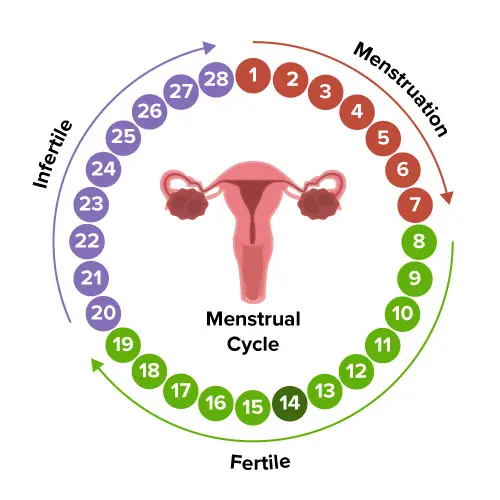
Understanding Your Menstrual Cycle: A Simple Breakdown
To use any safe days to avoid pregnancy method effectively, it helps to understand the basic phases of your cycle.
Phase 1: Menstruation (Day 1 to Day 5)
This is when your period happens. The lining of your uterus sheds, and bleeding occurs. Day 1 is the first day of bleeding. For most women, this phase lasts 3 to 7 days. During this phase, pregnancy is unlikely but not impossible — especially if you have a shorter cycle.
Phase 2: The Follicular Phase (Day 1 to Day 13)
This phase overlaps with menstruation. Your body is preparing to release an egg. Estrogen levels rise, and your uterine lining starts to thicken again. As you move through this phase, you’re getting closer to ovulation — and your fertility starts to increase.
Phase 3: Ovulation (Around Day 14 in a 28-Day Cycle)
Ovulation is the moment your ovary releases a mature egg. This is the most fertile day of your cycle. The egg survives for about 12 to 24 hours after release. However, sperm can survive inside the body for up to 5 days, which means the days leading up to ovulation are also high-risk for pregnancy.
Using an ovulation calculator can help you pinpoint this window with reasonable accuracy based on your cycle length.
Phase 4: The Luteal Phase (Day 15 to Day 28)
After ovulation, the egg either gets fertilized or dissolves. Your body prepares for either pregnancy or your next period. If fertilization doesn’t happen, hormone levels drop, and your period begins again. The days in this phase — after ovulation and before your next period — are generally considered safe days.
How to Calculate Safe Days Manually
If you don’t have access to a calculator right now, here’s how to figure out your safe days using the calendar method:
Step 1: Track your cycle for at least 6 months. Note the number of days from Day 1 of one period to Day 1 of the next.
Step 2: Find your shortest cycle. Subtract 18 from that number. This gives you the first fertile day of your cycle.
Step 3: Find your longest cycle. Subtract 11 from that number. This gives you the last fertile day of your cycle.
Example:
- Shortest cycle: 26 days → 26 – 18 = Day 8 (first fertile day)
- Longest cycle: 30 days → 30 – 11 = Day 19 (last fertile day)
So in this example, Days 8 through 19 are your fertile window. All other days are considered relatively safe.
Of course, doing this manually takes time and effort. That’s exactly why a period safe days calculator is so useful — it does all this math instantly.
Who Should Use a Safe Days / Fertility Calculator?
This kind of tool is helpful for many different people:
Women Trying to Avoid Pregnancy Naturally
If you prefer not to use hormonal contraception (like the pill or injections) or devices (like IUDs), the calendar method combined with a menstrual cycle calculator can help you practice natural family planning. Keep in mind, this method works best when your cycles are regular.
Women Trying to Get Pregnant
If you’re trying to conceive, knowing your fertile window is crucial. An ovulation calculator or fertility calculator helps you time intercourse during the days when you’re most likely to get pregnant — right around ovulation.
Women Who Want to Know Their Body Better
Many women simply want to understand what’s happening in their bodies. Tracking your cycle gives you insight into your hormones, mood changes, energy levels, and more. It’s a form of body literacy that benefits everyone.
How Accurate Is the Safe Days Method?
This is an important question, and honesty matters here.
The calendar or rhythm method is not 100% reliable. Studies suggest it’s about 76 to 88% effective with typical use. That means out of 100 women using this method for a year, around 12 to 24 may become pregnant.
The method is most reliable when:
- Your cycles are very regular (same length every month)
- You’ve been tracking for several months and have consistent data
- You avoid sex during the fertile window (not just the ovulation day)
It becomes less reliable when:
- Your cycles vary significantly in length
- You’re under stress, sick, or experiencing hormonal changes
- You’ve recently stopped hormonal contraception (your body may still be adjusting)
- You’ve recently given birth or are breastfeeding
The period safe days calculator gives you an estimate based on averages. For higher accuracy, you can combine it with other methods like tracking your basal body temperature (BBT) or checking cervical mucus.
Tips to Make Safe Days Tracking More Effective
If you want to get the most out of your safe days to avoid pregnancy tracking, here are some practical tips:
Track Your Cycle Every Month
Don’t just rely on memory. Use a period tracking app, a calendar, or our online calculator. The more data you have, the more accurately you can predict your cycle.
Know the Signs of Ovulation
Your body gives physical clues around ovulation:
- Cervical mucus becomes clear, slippery, and stretchy (like raw egg whites)
- Basal body temperature rises slightly (around 0.2°C) after ovulation
- Mild pelvic pain on one side (called mittelschmerz)
- Increased sex drive
These signs can help confirm what your ovulation calculator predicts.
Be Extra Careful Around the Fertile Window
Even if the calculator says Day 10 is your first fertile day, consider being cautious from a day or two before. Sperm can survive for several days, so even sex a few days before ovulation can result in pregnancy.
Use Backup Contraception If Unsure
On days close to your fertile window where you’re unsure, using a condom alongside natural tracking gives you an extra layer of protection. This combination approach is much more reliable than using the calendar method alone.
Common Myths About Safe Days — Debunked
There’s a lot of misinformation out there. Let’s clear up a few common myths:
Myth 1: “You Can’t Get Pregnant During Your Period”
Not entirely true. While it’s unlikely, it’s possible — especially if you have a short cycle. If your period lasts 7 days and you ovulate early (around Day 10), sperm from sex during your period could still be alive when the egg is released.
Myth 2: “Ovulation Always Happens on Day 14”
False. Day 14 is the average for a 28-day cycle. If your cycle is 32 days, you likely ovulate around Day 18. If it’s 24 days, you might ovulate around Day 10. A proper menstrual cycle calculator accounts for your individual cycle length.
Myth 3: “If My Cycle Is Regular, the Safe Days Method Is 100% Safe”
Unfortunately, no. Even with a regular cycle, stress, illness, travel, or other factors can shift your ovulation date unexpectedly. The safe days method is a great tool, but it should be used with awareness of its limitations.
Myth 4: “Tracking Apps Are Always Accurate”
Apps are helpful, but they’re only as good as the data you give them. An inaccurate entry or missed period log can throw off predictions. Always cross-check with physical signs if you’re relying on this method for contraception.
Why Use Our Period Safe Days Calculator?
Our period safe days calculator is designed to be simple, fast, and genuinely useful. Here’s what makes it stand out:
- Easy to use — just enter your last period date and average cycle length
- Instant results — no waiting, no sign-up needed
- Clearly labeled output — you’ll see your safe days, fertile window, and ovulation date at a glance
- Works for any cycle length — whether you have a 21-day or 35-day cycle, the calculator adjusts accordingly
- Free and private — your data stays on your device; we don’t store personal health information
Whether you’re using it as a fertility calculator to plan a pregnancy or as a natural tool to avoid one, it’s built to give you clarity.
When Should You See a Doctor?
While a period safe days calculator is useful for general cycle awareness, it’s not a substitute for medical advice. You should see a doctor if:
- Your periods are very irregular (varying by more than 7–10 days each cycle)
- You’ve been trying to conceive for 12 months (or 6 months if you’re over 35) without success
- You experience severe pain, extremely heavy bleeding, or spotting between periods
- You’ve recently stopped birth control and your cycles haven’t regulated after 3 months
A gynecologist can run hormone tests and ultrasounds to give you a clearer picture of your fertility and cycle health.
Final Thoughts
Understanding your cycle is one of the most empowering things you can do for your reproductive health. A period safe days calculator gives you a window into your own body — helping you make informed decisions whether you’re trying to get pregnant, avoid pregnancy, or simply understand your monthly rhythm better.
Just remember: this tool works best as part of a broader awareness of your body. Combine it with physical signs of ovulation, consistent cycle tracking, and open conversations with your healthcare provider if needed.
Use our safe days to avoid pregnancy calculator at the top of this page, enter your details, and get your personalized results in seconds. Your cycle, your choice — and now, your clarity.
Disclaimer: This calculator and the information on this page are for educational purposes only. They are not a substitute for professional medical advice, diagnosis, or treatment. Always consult a qualified healthcare provider for personal fertility or contraception guidance.